
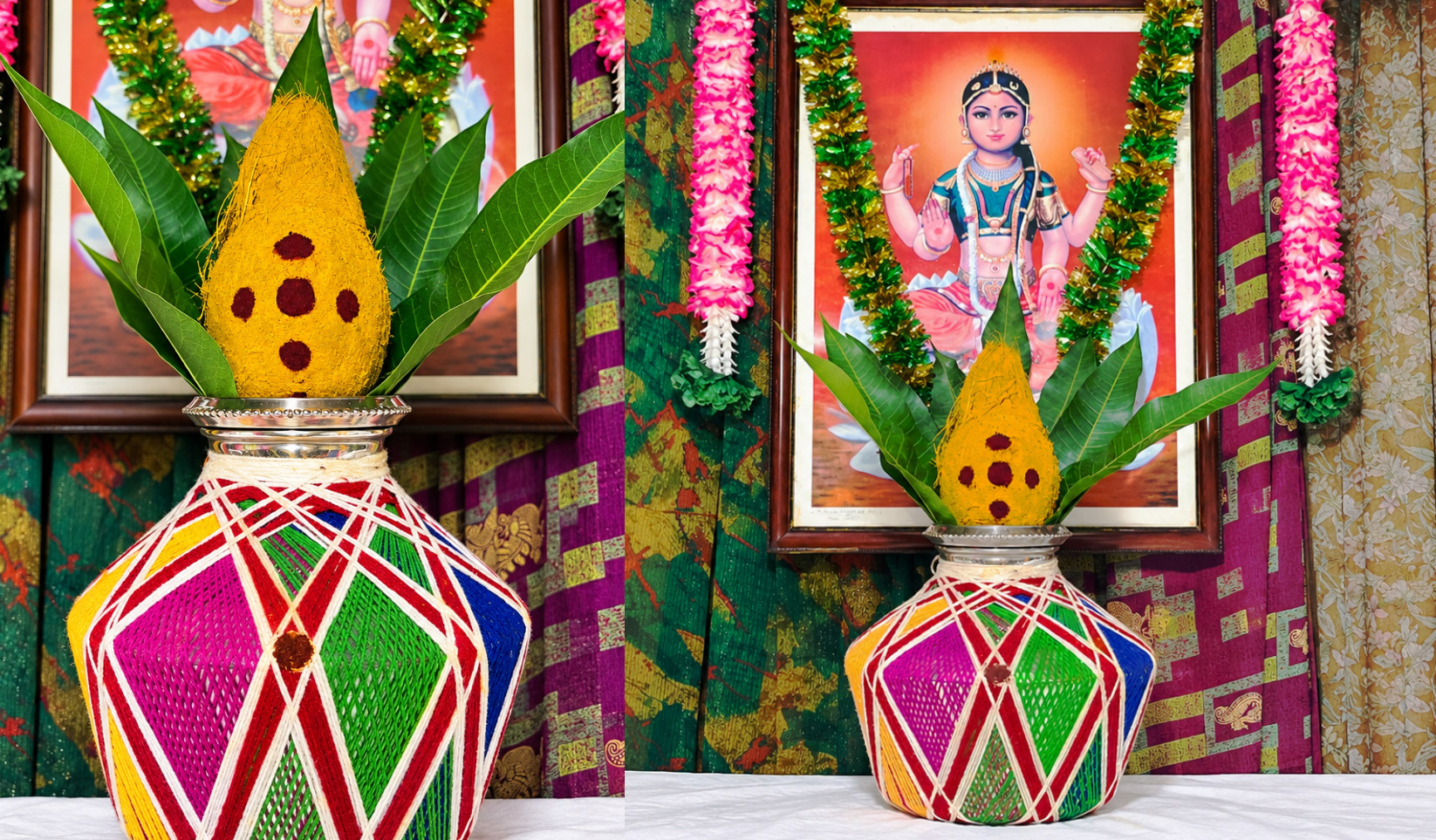
Why Do We Place a Kumbham During Navratri on Amavasya Tithi?
By Siva Muralidharan
The Sacred Kumbham: A Divine Beginning Before Navratri
Navratri is a sacred period dedicated to the worship of Divine Mother Sri Balatripurasundari. At Sreemadam Sri Balapeedam, Derisanamcope, the preparation of the sacred Kumbham (Kalash) before Navratri carries a deep spiritual meaning.
The Kumbham represents life, purity, abundance and the presence of divine energy. Its preparation on Amavasya Tithi, before the beginning of Navratri, marks a sacred transition from darkness towards divine light.
Why Is Kumbham Prepared on Amavasya?
Amavasya, the new moon day, is traditionally associated with silence, reflection and renewal. It provides a meaningful spiritual moment to prepare the mind and surroundings before entering the sacred nine days of Navratri.
The Kumbham prepared during this time symbolically represents:
- Purification of the mind and surroundings
- Letting go of negativity
- A fresh spiritual beginning
- Invoking divine blessings
- Welcoming the presence of Shakti
The movement from Amavasya towards Navratri beautifully represents the journey from darkness to light and from stillness to spiritual awakening.
The Spiritual Significance of the Kumbham
The Kumbham is regarded as a sacred representation of the Divine.
The water inside the Kumbham represents life and purity. The sacred leaves represent nature and life force, while the coconut represents fullness, auspiciousness and higher consciousness.
Together, these elements create a powerful symbol of creation, prosperity and divine presence.
At Sreemadam Sri Balapeedam, the Kumbham becomes part of the sacred atmosphere of Navratri worship, reminding devotees to approach the festival with faith, purity and devotion.
Navratri and the Divine Mother
Navratri is a time to surrender ourselves to the Divine Mother and seek Her blessings for strength, peace and spiritual growth.
At Sreemadam Sri Balapeedam, Derisanamcope, devotees come together in devotion to Sri Balatripurasundari, experiencing the sacred atmosphere of prayer and worship.
The Kumbham serves as a beautiful reminder that the Divine Mother is not only worshipped in a sacred space but is also experienced through faith, devotion and inner transformation.
From Amavasya Darkness to Navratri Light
There is a profound spiritual message in beginning the preparation on Amavasya.
Amavasya represents darkness and inner silence. Navratri represents the awakening of divine Shakti and spiritual light.
The sacred Kumbham connects these two moments.
It reminds us that before we welcome divine light into our lives, we must be willing to release the darkness within us.
Navratri therefore becomes more than a festival. It becomes an inner journey of purification, devotion and awakening.
A Sacred Beginning at Sreemadam Sri Balapeedam
Situated in Derisanamcope village, Sreemadam Sri Balapeedam is a place where devotees gather to experience the grace of the Divine Mother through sacred worship and spiritual practices.
The preparation of the Kumbham before Navratri is a simple yet meaningful reminder that every new beginning can be approached with faith, humility and devotion.
As the nine sacred nights of Navratri unfold, may the blessings of Sri Balatripurasundari bring peace to the mind, strength to the heart and divine grace into every home.
Amavasya teaches us to release the darkness within; Navratri teaches us to awaken the light of Shakti.
May Sri Balatripurasundari bless all devotees with peace, strength, prosperity, protection and spiritual grace.
Sreemadam Sri Balapeedam, Derisanamcope
Where devotion becomes a journey towards divine grace.

Siva Muralidharan
Director